
Architectural smart street lighting in historic European cities

Across Europe, public lighting is part of the street’s identity, especially in historic cities, where luminaires and poles are often chosen for architectural coherence, not just performance.
Preserving streetscapes while upgrading control
Across Europe, public lighting is part of the street's identity, especially in historic cities, where luminaires and poles are often chosen for architectural coherence, not just performance. That's why modernizing street lighting can be sensitive: cities want smarter operation and better efficiency, but they can't compromise the look and character of the streetscape.
This is where the right smart lighting architecture makes the difference. With a retrofit-friendly approach, cities can upgrade both older and newer luminaires, keeping the visual design intact while gaining modern control, monitoring and long-term operational value.
Preserving the streetscape is the visible benefit, but the lasting return comes from what happens behind the architecture. With inteliLIGHT in operation, cities can expect energy savings of up to 40% through intelligent ON/OFF switching, progressive dimming and motion-based activation, while reducing operational costs through real-time monitoring, faster fault detection and better maintenance planning.
The system can also help cities save up to 42% on maintenance costs and increase lamp lifetime by up to 30%, while turning the lighting grid into a foundation for future smart city applications.
The challenge: modernization under heritage and aesthetic constraints
In historic urban areas, street lighting projects often face a unique combination of requirements:
- Pole-mounted controllers are used when internal installation is not possible. These installation solutions are designed to have little to no visual impact, avoiding visible alterations to the luminaire or pole while allowing discreet external mounting where required.
- Mixed lighting assets across districts (decorative lanterns, modern LEDs, different pole types)
- A need to upgrade without "starting from scratch"
Retrofitting becomes essential: modernize what exists, while protecting architectural continuity.
A practical fit for architectural environments: discreet control at street level
Flashnet’s approach to retrofitting is built around flexibility and minimal visual impact. Depending on the lighting design and constraints, inteliLIGHT supports different controller formats:
- Pole-mounted controllers that can be installed externally with minimal visual impact due to their compact design, or can be integrated inside the pole or luminaire, remaining fully concealed.
- NEMA controllers, used where standard interfaces are available and external mounting is acceptable
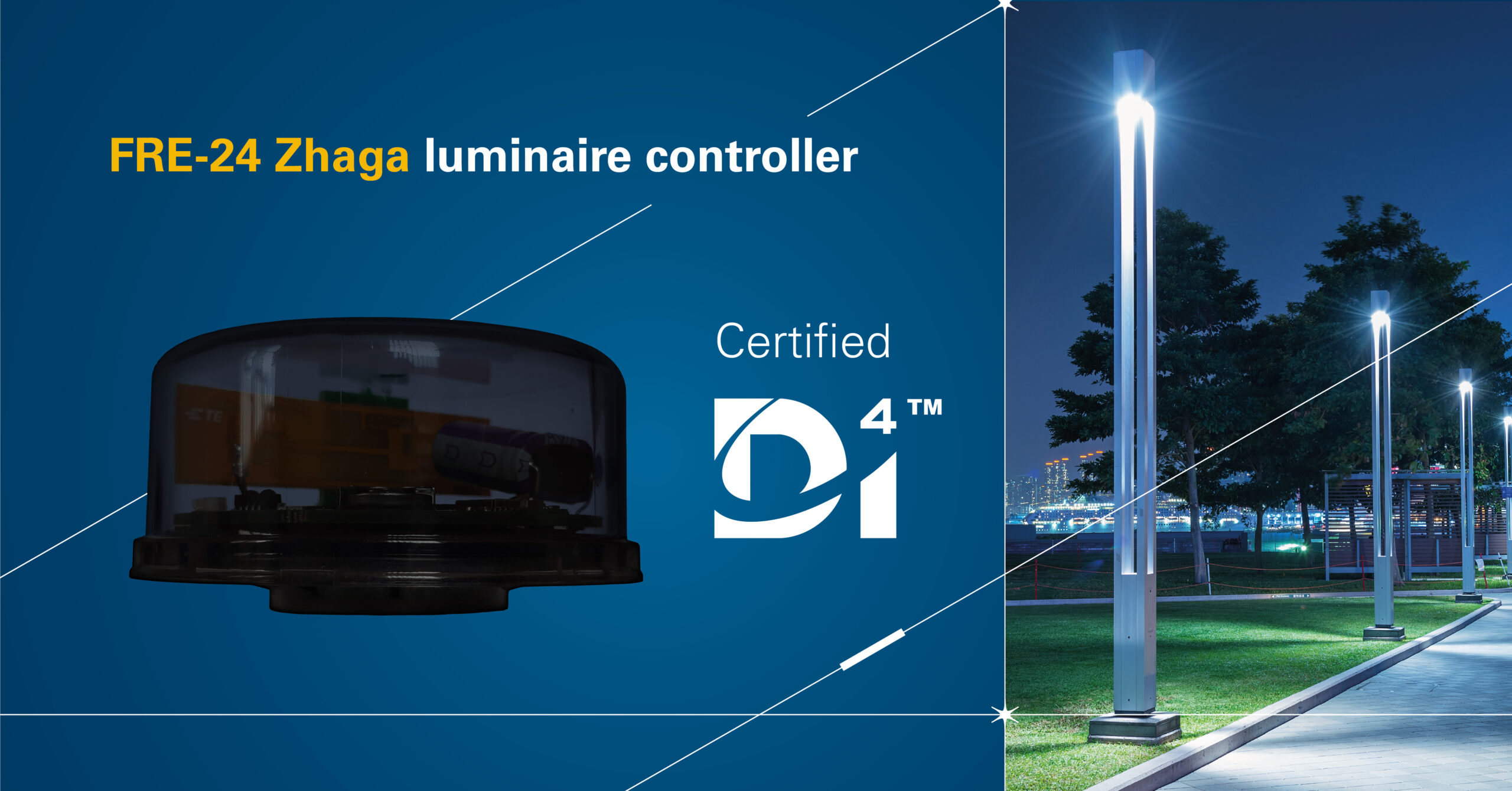
- Zhaga controllers, used for luminaires equipped with Zhaga interfaces, offering a compact, standardized option for smart lighting control, especially in modern LED installations.
This allows cities to choose what fits each area – whether it’s a heritage-sensitive boulevard, a modern district, or a mixed infrastructure environment.
Key advantages for architectural lighting systems:
- Discreet deployment options that preserve the street’s appearance
- Compatibility across diverse luminaires and poles
- Scalable, city-wide operations without forcing uniform hardware everywhere
- A foundation for broader IoT integration, when the city is ready
Connectivity decisions are especially important in heritage areas, where adding extra equipment can be difficult. In many European city projects, cellular connectivity (NB-IoT / LTE-M / GSM where needed) is a strong match because it can enable rollouts without additional visible networking infrastructure and supports straightforward scaling.
At the same time, each city and each area is different, so inteliLIGHT supports multiple communication technologies, including LoRaWAN, NB-IoT, LTE-M and GSM. This flexibility allows each project to use the connectivity option that best fits the local context, technical requirements and long-term smart city strategy.
Case study: Athens, smart street lighting with LoRaWAN, built for integration
Flashnet rolled out a smart street lighting project in Athens, Greece – a city where modern infrastructure must coexist with a strong architectural identity and centuries of heritage. While the deployment focused on a suburban area, it reflects Athens’ broader direction: upgrading urban services in a way that can scale citywide, including in areas where aesthetics and legacy infrastructure matter.
The project deployed 4,000 smart street lighting controllers. For this deployment, LoRaWAN was selected as the best choice for the case at hand, supporting long-range, low-power connectivity and reliable communication with the central management system.
It includes 4,000 NEMA and pole-mounted luminaire controllers, enabling real-time monitoring and control, improved operational visibility, and better efficiency across the network.
What’s just as important is what comes next: Athens also integrates smart waste management, supporting a broader move toward connected services. By integrating inteliLIGHT® controllers and other urban infrastructure into the city’s existing software through the Flashnet IoT platform and TALQ-certified interoperability, authorities gain real-time visibility across services and a more unified operational approach.
Case study: Cyprus, smart street lighting as the backbone of a national utility ecosystem
While Athens shows how LoRaWAN-based smart lighting can scale within a single city, Cyprus illustrates a different model: nationwide deployment, cellular connectivity, and integration far beyond illumination.
The initial deployment placed 32,000 in-pole inteliLIGHT controllers (model FRE-220-P-NB1-GSM) into Cypriot towns, with a further 10,000 controllers added in a subsequent phase.The controllers leverage CYTA’s NB-IoT and 2G networks for reliable connectivity under all conditions, and are managed by the inteliLIGHT CMS software and Flashnet IoT connectivity platform, both hosted in EAC datacenters.
The benefits compound: significant cost savings for the Cypriot economy, stronger environmental performance and the foundation for a truly integrated smart city — where energy, water, heating and lighting are managed through a single connected platform.
For European cities looking at smart lighting as a long-term investment, Cyprus shows what the destination can look like: not a standalone lighting upgrade, but the first move toward a connected, multi-utility infrastructure.
What this means for historic European streets
For historic European streets, smart lighting is not a technology upgrade, it’s an architectural and operational decision. Cities need solutions that improve efficiency and maintenance, but that also respect planning rules, preservation requirements and the everyday reality of mixed infrastructure, said Liviu Barbat, VP Business Development at Flashnet.
In practice, a smart lighting system suitable for architectural environments should:
- Modernize without visible compromise: keep the streetscape intact by minimizing external hardware and avoiding unnecessary changes to poles and luminaires.
- Work across generations of assets: support old and new fixtures in the same control environment, enabling phased upgrades that match budgets and timelines.
- Enable low-disruption connectivity: provide multiple communication options, with cellular often preferred in heritage areas for its simplicity and minimal street-level footprint.
- Connect to real operations: integrate with maintenance and workforce tools and align with open, interoperable architectures so lighting becomes part of a broader city ecosystem, not a standalone silo.
That’s how historic cities move forward: smarter lighting that delivers measurable operational value, while preserving the identity of the street.
About inteliLIGHT ®
inteliLIGHT® is a smart street lighting control solution that offers detailed lamp-level management capabilities (ON/OFF, dimming, real-time reporting) over multiple IoT communication technologies. In-depth grid awareness is obtained through accurate utility-grade readings of any changes occurring along the grid, reducing energy loss and offering advanced maintenance optimization tools. Furthermore, inteliLIGHT® is integrated with Smart City management platforms and offers support for further Smart City development. (www.inteliLIGHT.eu)
About FLASHNET
FLASHNET is a fast-paced tech company that integrates the latest IT, energy and telecommunications technologies into hardware and software solutions, creating and implementing intelligent systems for smarter cities and better infrastructure. Founded in 2005, FLASHNET is a leader in intelligent utility management systems, with worldwide operations. (www.flashnet.ro)
About Lucy Group
Lucy Group is a diversified international group with operating businesses across three sectors: Lucy Electric, Lucy Controls and Lucy Real Estate. Since its origins in Oxford, over 200 years ago, the Group has grown and evolved. Lucy Group now employs over 1,500 employees across offices and factories in 10 regions and trades in over 70 countries. The Group’s annual revenues in 2021 were over £250 million. Further information can be found at www.lucygroup.com